
Reflections From a Depth Psychology Lens
This article is part of the Things Nobody Says Out Loud series—reflections on dreams, grief, art, symbolism, ritual, and healing through a depth psychology lens.
Things nobody says out loud:
The dream knows before you do.
Most people approach dreams looking for answers.
What does the crow mean?
Why do I keep dreaming about my childhood home?
Why am I being chased?
Why does the same dream keep returning?
We often treat dreams like puzzles that need solving.
Yet after years of studying dreams, working with dreamers, and training in Dream Tending, I have come to believe something different.
The dream is often less interested in providing answers than in creating a relationship.
Things nobody says out loud:
The dream often recognizes truths long before the conscious mind is willing to see them.
As a depth psychologist and dream therapist, I have witnessed this repeatedly.
A person dreams of a crumbling house years before acknowledging that their life no longer fits.
Someone dreams of being lost before recognizing how disconnected they have become from themselves.
A recurring dream continues appearing until a difficult emotional truth is finally confronted.
The unconscious is remarkably patient.
The dream will continue speaking until it is heard.
This understanding did not begin in graduate school.
It began much earlier.
Long before I became a therapist, I was fascinated by dreams.
Some dreams remained with me for years. Certain images carried an emotional weight that felt impossible to dismiss. Even as a child, I sensed there was something important happening beneath the surface of dreaming.
The images felt alive.
The emotions lingered.
The dreams seemed to know something I did not.
Looking back, I realize that dreams were among my earliest teachers.
Things nobody says out loud:
Some dreams stay with us because they have not finished speaking.
My fascination with dreams eventually led me to advanced training in Dream Tending with Stephen Aizenstat, founder of the Dream Tending approach and former president of Pacifica Graduate Institute.
For the first time, I encountered an approach that mirrored what I had intuitively sensed for years.
Dreams are not simply problems to solve.
They are living experiences.
Rather than asking, “What does this dream mean?” Dream Tending encourages us to ask, “What is the dream showing us?”
This distinction changes everything.
Meaning emerges through relationship.
Not through control.
Not through reduction.
Not through simplistic dream dictionaries.
The dream is alive.
Things nobody says out loud:
Not every dream arrives to comfort you.
Some dreams arrive to challenge you.
Some arrive to interrupt a story you have been telling yourself.
Some arrive carrying grief.
Some arrive carrying possibility.
Some arrive carrying aspects of yourself that have been neglected, denied, or forgotten.
The unconscious is under no obligation to preserve our preferred self-image.
Dreams often reveal what we would rather avoid.
This is why recurring dreams matter.
The recurring dream is often a conversation that remains unfinished.
The image returns because the psyche continues attempting communication.
The dream is not repeating because it has failed.
It is repeating because it has not yet been heard.
Things nobody says out loud:
The dream often knows where healing is needed before the dreamer does.
Throughout my clinical work, I have seen dreams anticipate emotional transformations months and sometimes years before conscious understanding emerges.
A symbol appears.
An image returns.
A story unfolds.
Only later does the dreamer recognize how accurately the dream reflected a psychological process already underway.
This is one reason depth psychology places such importance on dreams.
Dreams offer access to dimensions of experience that are often unavailable to conscious awareness.
Carl Jung believed that dreams reveal aspects of the psyche seeking integration. Rather than disguising meaning, dreams frequently present psychological realities through symbols, metaphors, emotions, and images.
The dream is not trying to deceive us.
It is trying to communicate.
Things nobody says out loud:
The unconscious speaks symbolically because some truths cannot be communicated directly.
This is where dream symbols become important.
People often ask me what a particular symbol means.
What does the snake mean?
What does the crow mean?
What does the river mean?
The answer is rarely simple.
A crow may carry one meaning for one dreamer and an entirely different meaning for another.
Symbols are alive.
They contain both personal and collective meaning.
This is why dream work requires curiosity rather than certainty.
The goal is not to force an interpretation.
The goal is to develop a relationship with the image.
A dream image often unfolds over time.
Years, sometimes decades.
The symbol reveals itself gradually.
Just as meaningful relationships deepen through attention, so do dreams.
Things nobody says out loud:
The goal of dream work is not interpretation.
The goal is relationship.
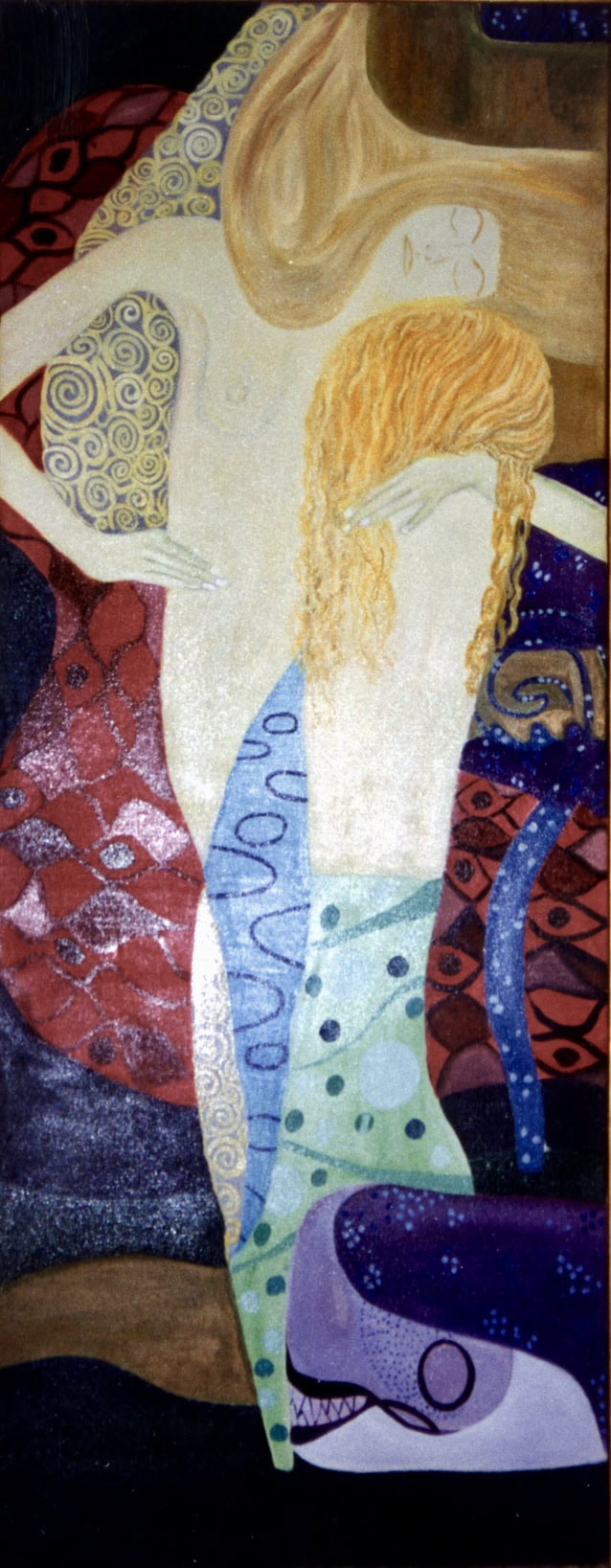
As both a dream therapist and Jungian art therapist, I often encourage dreamers to engage their dreams creatively.
Paint the dream.
Write the dream.
Dialogue with the image.
Draw the symbol.
Allow the dream to continue speaking.
Dreams and art emerge from the same imaginal realm.
Both reveal dimensions of the psyche that exist beyond ordinary language.
Sometimes a dream image can express more truth than an hour of explanation.
Sometimes a single symbol changes the way we understand our lives.
Sometimes healing begins when we stop asking what the dream means and start asking what the dream wants.
Things nobody says out loud:
The dream you’ve been trying to understand may actually be trying to understand you.
This is what continues to fascinate me about dreams after all these years.
Dreams remind us that we are larger than our conscious identity.
Larger than our daily routines.
Larger than the stories we tell ourselves.
There is a deeper intelligence moving within the psyche.
Dreams provide one of the most direct pathways into that mystery.
The dream is not the interruption.
The dream is the invitation.
An invitation to listen.
To wonder.
To remember.
To become.
Because the psyche is always speaking.
And often, it speaks first through a dream.
About the Author
Dr. Angelina H. Rodriguez is a Depth Psychologist, Jungian Art Therapist, Dream Therapist, presenter, and researcher with more than 20 years of clinical experience. She completed advanced Dream Tending training with Stephen Aizenstat and integrates dreams, symbolism, art, ritual, and depth psychology into her clinical work, presentations, and research. Her work explores how dreams reveal pathways toward healing, meaning, and psychological transformation.