
Reflections From a Depth Psychology Lens
Things nobody says out loud:
The experiences that shape us most cannot always be explained through logic.
Sometimes they arrive through a dream.
Sometimes through grief.
Sometimes through an image that refuses to leave us.
Sometimes through a memory from childhood that continues speaking decades later.
For me, it was all of those things.
This series, Things Nobody Says Out Loud, was born from a lifelong fascination with the hidden dimensions of human experience—those moments that seem to carry meaning beyond what we can immediately explain. The dream that lingers. The grief that changes us. The symbol that appears repeatedly throughout a lifetime. The artwork that reveals something we did not know we were carrying.
As a depth psychologist, Jungian art therapist, dream therapist, researcher, and presenter, I have spent decades exploring the relationship between psyche, creativity, symbolism, grief, ritual, and healing. Yet long before these became professional interests, they were deeply personal ones.
Some of my earliest memories involve my father.
Unlike many people, I was not taught to fear difficult subjects. My father was a poet and a teacher. He spoke of life, death, imagination, and mystery with curiosity rather than avoidance. Through poetry and storytelling, he introduced me to the idea that not everything meaningful could be measured, explained, or controlled.
At the same time, art became part of my language.
As a child, I spent countless hours drawing, painting, imagining, and creating stories. Looking back, I realize that creativity offered something more than entertainment. It became a way of understanding the world. Art allowed questions to exist before answers appeared. Images carried emotions that words could not yet express.
I did not know it then, but I was already learning to listen to the psyche.
Things nobody says out loud:
The psyche rarely speaks in the language of facts.
It speaks in the language of image.
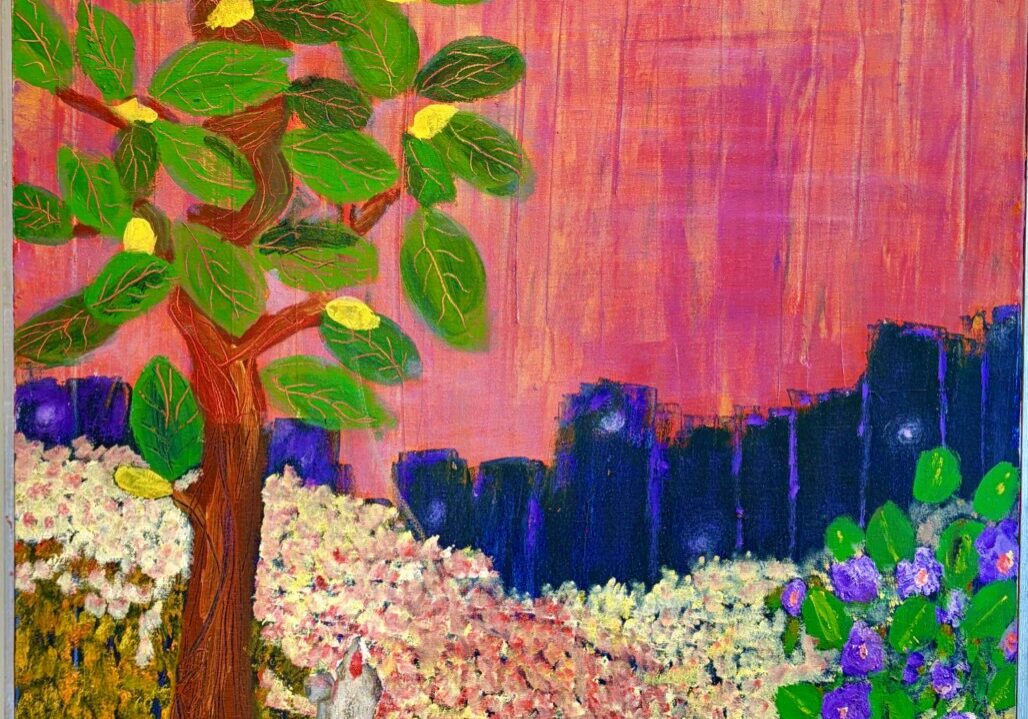
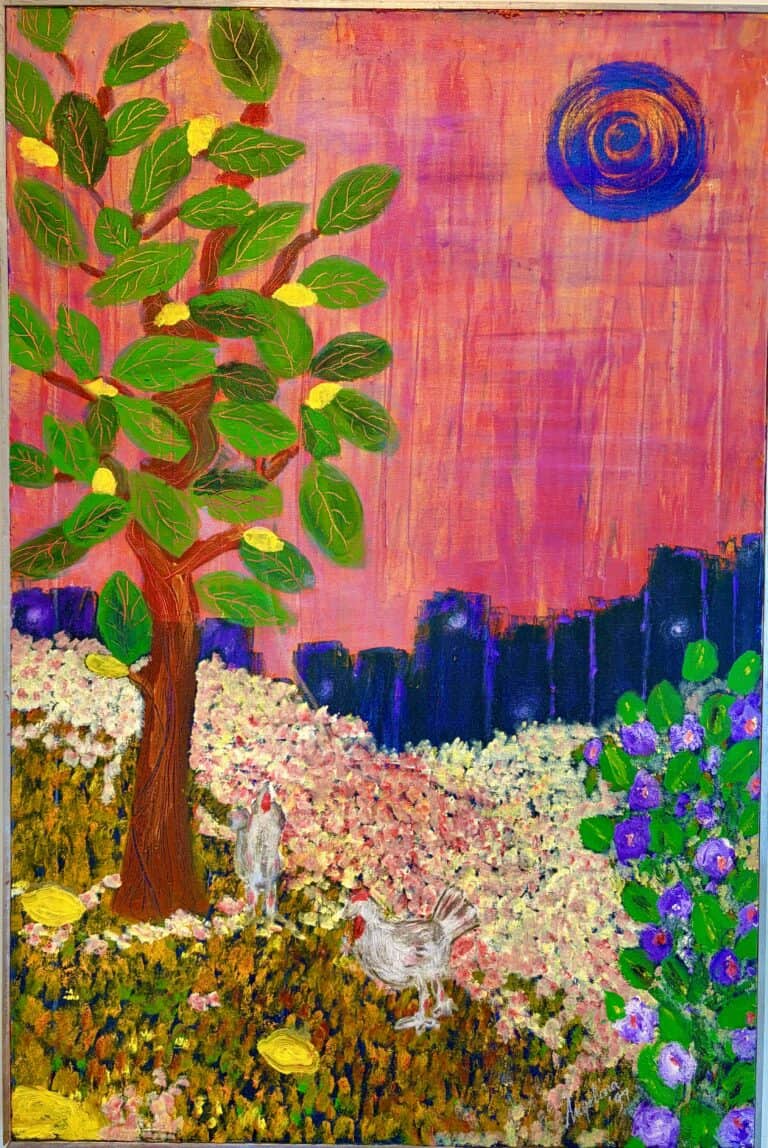
One of my favorite paintings hangs in my office today. It is called The Lemon Tree.
The painting emerged from a childhood memory of sitting beneath a lemon tree in my grandmother’s backyard. My father and I had created a playful game involving stolen lemons, laughter, imagination, and innocence. Decades later, the image continues to move me.
What fascinates me is not simply the memory itself.
It is that the image remains alive.
Every time I encounter that painting, something awakens. The painting continues speaking. It evokes emotion, reflection, memory, connection, and meaning. The image contains more than a story. It contains a relationship.
This understanding became central to my work.
Images are not always passive objects.
Dreams are not merely random events.
Symbols are not decorative details.
The psyche communicates through them.
Things nobody says out loud:
Many of the answers we seek arrive disguised as symbols.
Throughout my life, I have repeatedly found myself drawn toward experiences that exist at the intersection of psychology, creativity, ritual, dreams, mythology, and healing.
When my grandmother died, I encountered grief in a way I had never experienced before. Like many people facing profound loss, I searched for ways to understand what had happened and how to carry it.
What emerged was not a quick solution.
What emerged was ritual.
The experience eventually led me toward the tradition of the Ofrenda, a symbolic practice rooted in remembrance, relationship, creativity, and connection with those who came before us. Years later, this journey became the foundation of my doctoral dissertation, which explored the Ofrenda ritual as a bridge between art, grief, death, memory, and psychological healing.
My research taught me something I continue to witness in both clinical work and everyday life:
Human beings are meaning-making creatures.
When life changes us, we instinctively search for symbols, stories, rituals, and images capable of helping us understand the experience.
The psyche naturally seeks meaning.
Things nobody says out loud:
Healing is not always found through explanation.
Sometimes it is found through encounter.
This realization ultimately led me toward depth psychology.
While many psychological approaches focus primarily on symptom reduction, depth psychology asks different questions.
What is the symptom trying to communicate?
Why does this dream keep returning?
What meaning lives beneath the anxiety?
What does the image want us to see?
What is seeking expression through the unconscious?
These questions transformed my understanding of healing.
The goal is not simply to remove discomfort.
The goal is to develop a relationship with the deeper forces shaping our lives.
Carl Jung understood that the unconscious communicates through dreams, symbols, myths, archetypes, emotions, and creative expression. The psyche continually seeks wholeness and will often communicate through indirect means when direct awareness is unavailable.
Over the years, my work as a Jungian art therapist, dream therapist, presenter, and clinician has repeatedly confirmed this understanding.
Again and again, I have watched dreams reveal truths before conscious insight emerges.
I have watched artwork express grief before words could reach it.
I have watched rituals create containers for loss, transition, and transformation.
I have watched symbols carry wisdom that no amount of explanation could fully capture.
Things nobody says out loud:
The psyche is remarkably patient.
It will continue speaking until we are willing to listen.
Sometimes it speaks through anxiety.
Sometimes through longing.
Sometimes through creativity.
Sometimes through grief.
Sometimes through dreams.
Sometimes through a painting hanging quietly on an office wall.
The challenge is not that the psyche is silent.
The challenge is that modern life rarely teaches us how to hear it.
We are encouraged to move quickly.
To be productive.
To stay distracted.
To seek immediate answers.
Yet some experiences require something different.
They require curiosity.
Reflection.
Imagination.
Patience.
They require the willingness to sit with mystery long enough for meaning to emerge.
Things nobody says out loud:
The goal of healing is not to eliminate mystery.
The goal is to develop a relationship with it.
This series was created for those who sense there is something more beneath the surface of ordinary life.
For those who are curious about dreams.
For those carrying grief.
For those drawn to symbolism, art, ritual, mythology, and psychological transformation.
For those who suspect that anxiety, loss, creativity, longing, and imagination may contain messages worth exploring rather than simply problems to eliminate.
In the articles that follow, I will explore healing, dreams, art, symbols, grief, shadow work, ritual, archetypes, and the unconscious through a depth psychological lens.
Not because I believe I possess all the answers.
But because I have spent a lifetime asking questions.
The questions that shaped me as an artist.
As a therapist.
As a researcher.
As a presenter.
And most importantly, as a human being.
Things nobody says out loud:
The psyche is always speaking.
The question is whether we are listening.
About the Author
Dr. Angelina H. Rodriguez is a Depth Psychologist, Jungian Art Therapist, Dream Therapist, presenter, and researcher with more than 20 years of clinical experience. Her work explores dreams, symbolism, grief, ritual, creativity, and psychological transformation. She is the author of doctoral research examining the Ofrenda ritual as a bridge between art, memory, grief, and healing, and regularly presents on depth psychology, Jungian thought, dream work, and symbolic healing.